Learn About the I Ching
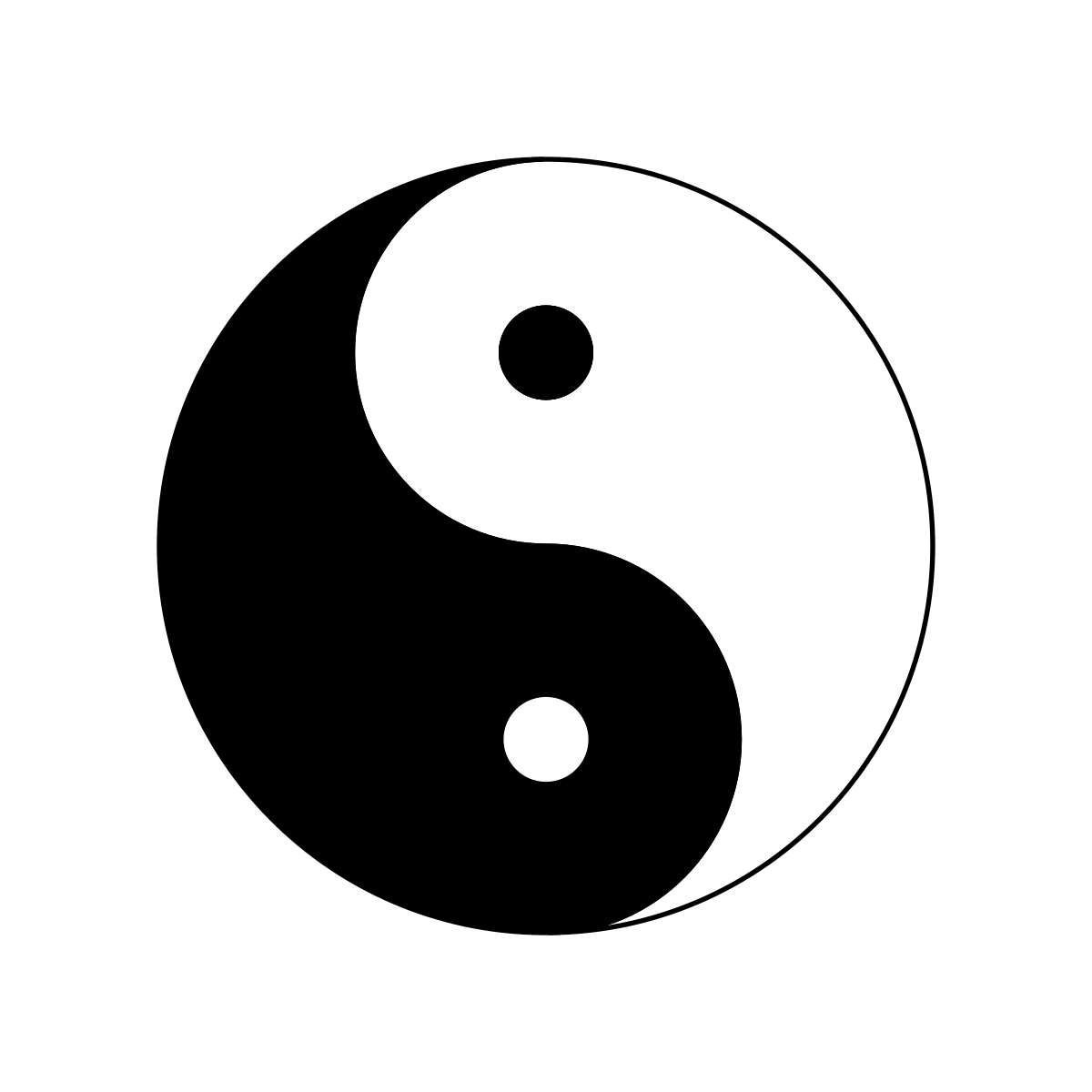
The I Ching, or Book of Changes, is one of the oldest Chinese texts — a system for understanding how situations shift, develop, and resolve. At its heart are 64 hexagrams, each a six-line figure describing a particular condition or turning point. Rather than predicting a fixed future, the I Ching offers a structured way to reflect on where you stand and how things are moving.
This section covers the ideas and methods behind the oracle. If you are new to it, a good path is to begin with yin and yang — the two forces every line is built from — then read how to consult the I Ching to see how a reading is cast and interpreted. When you are ready, ask the oracle a question or browse all 64 hexagrams to explore their meanings directly.
Learning the I Ching
Start with the fundamentals, then move on to the traditional methods of consultation and the deeper structure of the text:
- How to Consult the I Ching — The complete process, from framing a clear question to casting the lines and reading the result.
- Yin and Yang Explained — The two complementary forces, active and yielding, from which every hexagram line is formed.
- Understanding the Ten Wings — The classical commentaries, traditionally attributed to Confucius, that turned the raw oracle into a work of philosophy.
- The Yarrow Stalk Method — The traditional fifty-stalk casting method and the probabilities that set it apart from coin tosses.
- Hexagram Orderings Explained — Why the 64 hexagrams can be arranged four different ways — King Wen, Mawangdui, Eight Palaces, and binary — and what each arrangement reveals.
- Making Sense of Multiple Changing Lines — How to read a hexagram when several lines change at once (an external guide from I Ching with Clarity).
- Use IChing.Rocks with AI Assistants — Connect Claude, ChatGPT, and other MCP clients directly to our translations and reading data.
Resources
These are some of the most respected I Ching resources available online, each offering a different translation, tradition, or point of view:
- James DeKorne The Gnostic Book of Changes (depth-focused psychological interpretation)
- Hilary's I Ching with Clarity (modern practical approach)
- Steve Marshall's Yijing Dao (hexagram sequences, diagrams, and scholarly analysis)
- James Legge Classical translation (historical reference)
- I-ching Methods and Meaning
- Contemplating the I Ching
View our Privacy Policy and Terms of Service.